How to Keep Gaming Clan Members Active and Engaged
Building a gaming clan is exciting. You recruit your first members, organize your squad, and start playing together. But after a few weeks, something happens. Players stop showing up, conversations slow down, and your once-active gaming community begins to feel empty.
This is one of the biggest challenges facing gaming clan leaders: keeping members engaged after the excitement of joining wears off.
The good news? You don't need hundreds of members or daily tournaments to build a thriving clan. You need a community that gives players reasons to return.
Here are eight practical strategies for keeping your gaming clan active and engaged.
1. Create a Consistent Gaming Schedule
One of the easiest ways to lose members is to leave everything unplanned.
When players don't know when others will be online, they eventually stop checking in.
Establish a predictable schedule that includes:
Consistency helps members build gaming into their routines.
Pro tip: Consider your members' time zones and real-life responsibilities. A flexible schedule works better than requiring everyone to play every night.
2. Give Members a Sense of Belonging
People may join a gaming clan for competition, but many stay because of friendships.
Create an environment where members feel recognized and included.
Welcome new players personally, encourage introductions, and celebrate individual achievements.
Avoid creating an atmosphere where only the highest-ranked players receive attention.
A casual player who contributes positively to the community can be just as valuable as your strongest competitor.
The goal is to make every member feel like part of the team.
3. Organize Events Beyond Regular Matches
Playing the same games with the same people can eventually become repetitive.
Special events create excitement and give members something to anticipate.
Consider organizing:
Friendly internal tournaments
Squad-versus-squad competitions
Community challenge nights
Achievement-hunting sessions
New game exploration events
Screenshot and gameplay clip contests
Not every event needs a prize. Sometimes friendly competition and bragging rights are enough.
Rotating event formats also gives different types of players opportunities to participate.
4. Recognize Member Contributions
Recognition is a powerful motivator in gaming communities.
Players appreciate knowing their contributions matter.
You can recognize members for:
Helping new players
Participating consistently
Demonstrating leadership
Winning community challenges
Sharing useful strategies
Supporting other clan members
Recognition doesn't always need to be competitive.
A member who welcomes newcomers or helps resolve disagreements may contribute more to your clan's long-term success than someone who wins every match.
5. Keep Communication Active Without Creating Noise
An inactive chat can make a gaming clan appear abandoned. But constant notifications can be just as frustrating.
Find a balance.
Encourage discussions about game updates, strategies, upcoming events, and community achievements.
Create opportunities for members to share clips, screenshots, and memorable gaming moments.
Avoid overwhelming members with unnecessary announcements.
Clear communication also helps everyone understand when events are happening and how to participate.
A healthy gaming community should feel welcoming, not demanding.
6. Give Members Opportunities to Lead
Clan leaders who try to manage everything themselves often become overwhelmed.
Instead, encourage trusted members to take responsibility for different aspects of the community.
Possible responsibilities include:
Organizing gaming events
Welcoming new recruits
Coordinating competitive squads
Moderating discussions
Managing community challenges
Helping members improve their gameplay
Sharing responsibility makes members feel invested in the clan's success.
It also prevents the entire community from depending on one person's availability.
For more guidance, read our article on Gaming Clan Roles and Ranks: How to Organize Your Team for Success.
7. Ask Members What They Actually Want
Sometimes clan leaders assume they know why members are becoming inactive.
Instead of guessing, ask.
A simple community poll can reveal whether members want different games, better event times, more casual activities, or fewer competitive requirements.
You might discover that members haven't lost interest in the clan at all. They simply cannot participate in the current schedule.
Acting on feedback demonstrates that the community belongs to everyone, not just its leadership.
Remember that you won't satisfy every preference. Focus on improvements that benefit the broader group while keeping your clan's identity intact.
8. Make It Easy for Inactive Members to Return
Not every inactive player has abandoned your community.
People have jobs, school, families, and other responsibilities.
A member who disappears for two weeks may simply be busy.
Avoid treating every absence as a lack of loyalty.
Instead:
Welcome returning members without criticism.
Share upcoming events so they can rejoin easily.
Allow casual participation when appropriate.
Keep community expectations realistic.
Check in occasionally without pressuring anyone.
Building a long-term gaming community means understanding that participation naturally changes over time.
A flexible clan is often better positioned to retain members than one with unnecessarily strict activity requirements.
How to Measure Gaming Clan Engagement
Keeping a clan active isn't just about counting members.
A community with 25 engaged players can be healthier than one with 500 inactive accounts.
Pay attention to meaningful indicators:
Event participation: How many members regularly join organized activities?
Community conversations: Are members communicating and helping one another?
Returning players: Do members continue participating from month to month?
New member involvement: Are recruits becoming active participants or disappearing shortly after joining?
Member contributions: Are players organizing activities, sharing content, and supporting the community?
These signals provide a better picture of community health than membership totals alone.
The most successful gaming clans aren't necessarily the biggest or most competitive.
They're the communities where players feel connected, appreciated, and excited to participate.
By creating consistent events, recognizing contributions, encouraging leadership, and maintaining healthy communication, you can give members meaningful reasons to stay.
Recruitment helps a clan grow. Engagement helps it survive.
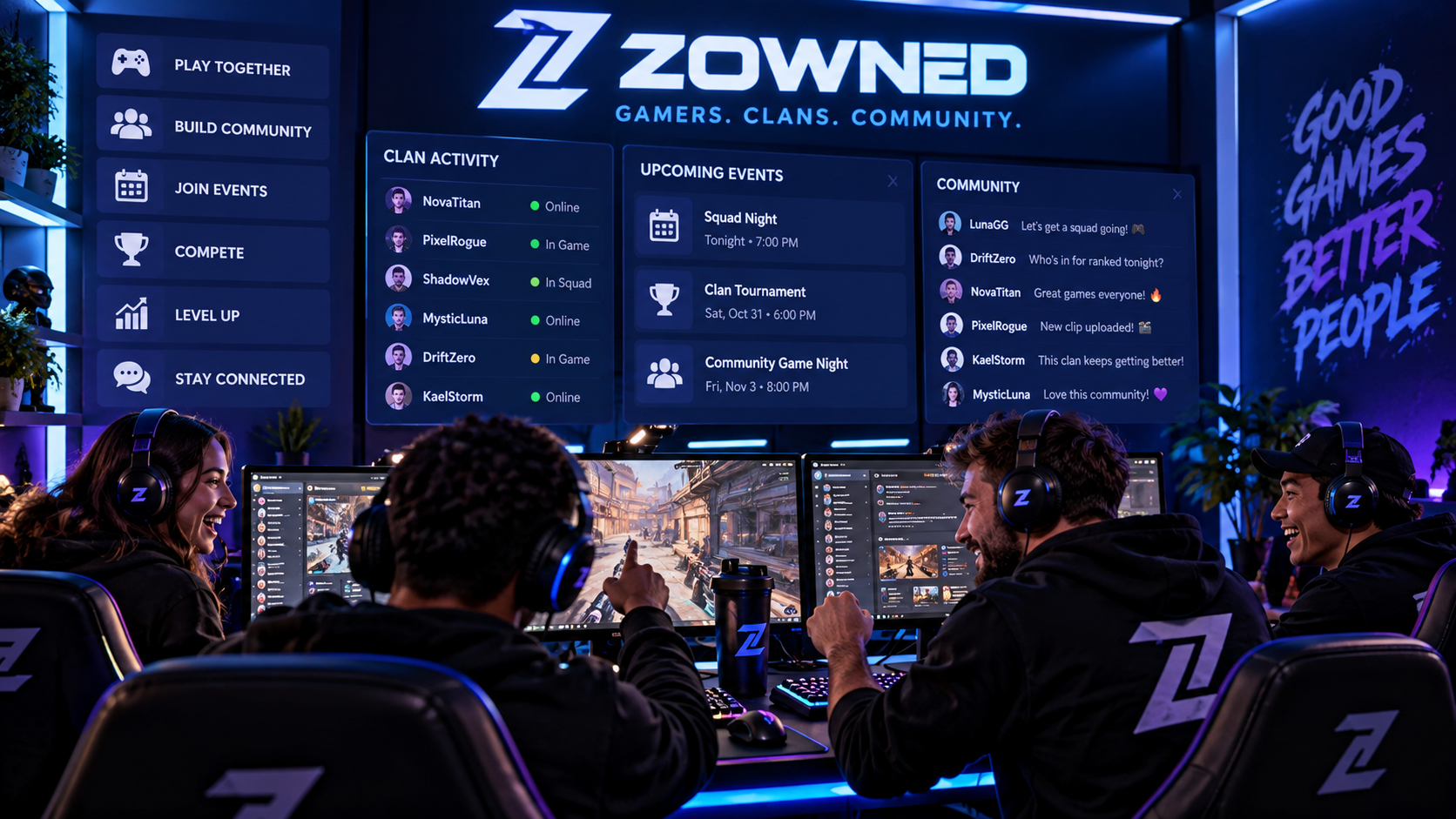
Zowned is designed to bring gaming communities together through clans and squads, gamer profiles, live chat, media sharing, challenges, and progression features.
Whether you're organizing a competitive team or building a casual gaming community, having a dedicated place for your members can help strengthen your clan's identity.
Explore Zowned and start building a community your players will want to return to.



Article Comments
Join the discussion