Building a gaming clan is one thing. Keeping it organized as more players join is another challenge entirely.
Whether your clan competes in Call of Duty, Fortnite, Valorant, or other multiplayer games, having clearly defined roles and ranks helps everyone understand their responsibilities.
Without structure, clan leaders often become overwhelmed, members become confused about expectations, and decisions can feel inconsistent.
A well-designed clan ranking system creates accountability, rewards participation, and gives members something to work toward.
The key is creating a structure that supports your community rather than making it unnecessarily complicated.
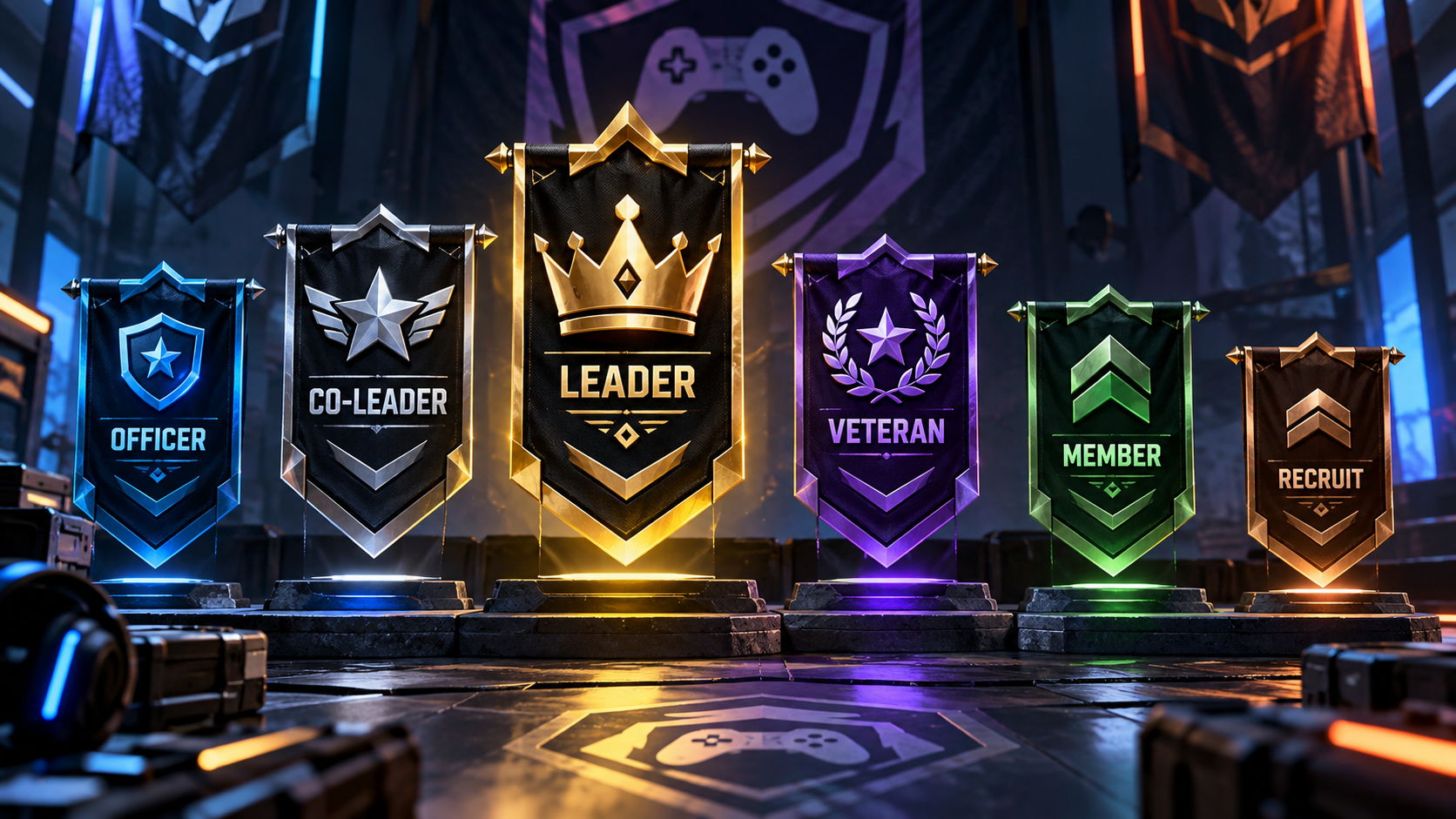
The Most Common Gaming Clan Roles
Not every clan needs dozens of ranks. Most communities can operate effectively with five or six well-defined roles.
1. Clan Leader
The clan leader is responsible for the overall direction of the community.
Typical responsibilities include:
Establishing clan rules and expectations
Making final decisions on major changes
Managing senior leadership
Representing the clan in partnerships and competitions
Resolving serious disputes
A good clan leader doesn't need to control every activity. Successful leaders delegate responsibilities and encourage other members to contribute.
2. Co-Leader
Co-leaders help manage the clan and provide continuity when the leader is unavailable.
Their responsibilities may include organizing events, supporting recruitment, overseeing moderators, and helping resolve disagreements.
Larger clans may benefit from multiple co-leaders who manage different areas of the community.
3. Officers and Moderators
Officers keep daily operations running smoothly.
Depending on the size of the clan, they might:
Officers should be selected based on reliability, communication, and judgment rather than gaming skill alone.
4. Veteran Members
Veterans are established players who have demonstrated loyalty and consistent participation.
This rank recognizes experience without necessarily requiring leadership responsibilities.
Veterans can mentor newer players, provide feedback, and help maintain the clan's culture.
5. Members
Regular members form the foundation of every gaming community.
They participate in matches, join discussions, share gaming content, and contribute to community activities.
A strong clan should make regular members feel valued rather than treating them as an afterthought.
6. Recruits
Recruits are new players who are getting familiar with the clan.
Some communities use a short introductory period before granting full membership.
During this time, recruits can learn the rules, meet other players, and determine whether the clan is a good fit.
Recruitment periods should be reasonable and transparent. New members shouldn't feel like they are being subjected to an endless audition.
Example Gaming Clan Rank Structure
Here is a simple hierarchy suitable for a growing gaming community.
RankPrimary responsibilityLeaderOverall strategy and administrationCo-LeaderLeadership support and coordinationOfficerModeration and event managementVeteranMentorship and recognitionMemberCommunity participationRecruitNew member onboardingThis structure can be expanded as the community grows.
For smaller clans, combining officer and co-leader responsibilities may be sufficient.
One of the biggest mistakes gaming communities make is promoting players based entirely on friendships.
When members believe promotions are unfair, trust in leadership can deteriorate.
Instead, establish clear promotion criteria.
Reward Consistent Participation
Players who regularly join gaming sessions, communicate with teammates, and support clan activities demonstrate commitment.
However, activity should not be measured solely by hours played. Members have jobs, families, and other responsibilities.
Quality participation matters more than simply being online.
Recognize Positive Contributions
Players who help new members, organize activities, or resolve disagreements often contribute more to a community than their statistics suggest.
Recognizing these contributions encourages a supportive environment.
Evaluate Leadership Potential
Being the best player doesn't automatically make someone a good moderator or officer.
Leadership requires patience, fairness, communication, and the ability to handle disagreements constructively.
Members should understand how ranks are earned.
Consider documenting the expectations for each position and reviewing promotions periodically.
Transparency reduces confusion and helps prevent favoritism.
Should Gaming Clans Use XP and Activity-Based Rankings?
Experience points and activity tracking can make clan participation more engaging.
Members might earn recognition for completing challenges, participating in events, or reaching community milestones.
However, an important distinction exists between progression ranks and administrative roles.
A player with the highest XP shouldn't automatically receive permission to moderate other members or change clan settings.
Administrative privileges require trust and judgment.
Progression systems work best when they reward involvement without automatically granting authority.
This distinction helps maintain security while giving members visible goals.
Organizing Multiple Squads Within One Clan
As communities grow, a single clan may contain players interested in different games, platforms, or competitive levels.
For example, one community might maintain:
Each group can have its own coordinator while remaining part of the larger community.
This approach helps players find teammates with similar interests without fragmenting the clan.
A shared community identity also makes it easier to organize cross-game events and recognize achievements.
How Zowned Can Support Your Clan Structure
Managing a gaming community becomes more challenging when information is scattered across multiple platforms.
Zowned brings gaming community features together in one place, including clans and squads, gamer profiles, live chat, challenges, and XP progression.
These tools can help communities establish a recognizable identity, coordinate players, and encourage participation.
Gamer profiles give members a way to represent themselves, while challenges and progression features provide additional opportunities for engagement.
Clan leaders can use these community tools alongside their own documented leadership structure and promotion policies.
The goal is to spend less time dealing with organizational confusion and more time building an active gaming community.
Common Mistakes When Creating Clan Ranks
Even well-intentioned ranking systems can create problems.
Creating too many ranks: A clan with 15 members probably doesn't need 20 leadership positions.
Promoting based only on skill: Competitive performance and leadership ability are different qualities.
Giving everyone administrative privileges: Too many privileged accounts can create security and moderation problems.
Never reviewing leadership positions: Officers who become inactive may need to step aside.
Making ranks more important than community: Members should feel respected regardless of their position.
The best clan structure is simple, understandable, and flexible enough to evolve.
Final Thoughts: Build a Clan Where Everyone Has a Place
Gaming clan roles and ranks are about more than titles.
They establish expectations, recognize contributions, and create opportunities for members to become more involved.
Start with a simple leadership structure, establish fair promotion guidelines, and adjust your system as the community grows.
Most importantly, remember that a successful gaming clan depends on its members, not just its leaders.
If you're building or organizing a gaming community, explore Zowned's gaming community platform and discover tools designed to bring players, squads, and competition together.



Article Comments
Join the discussion